On facial anatomy, muscular tension and the relationship between structure, expression and touch.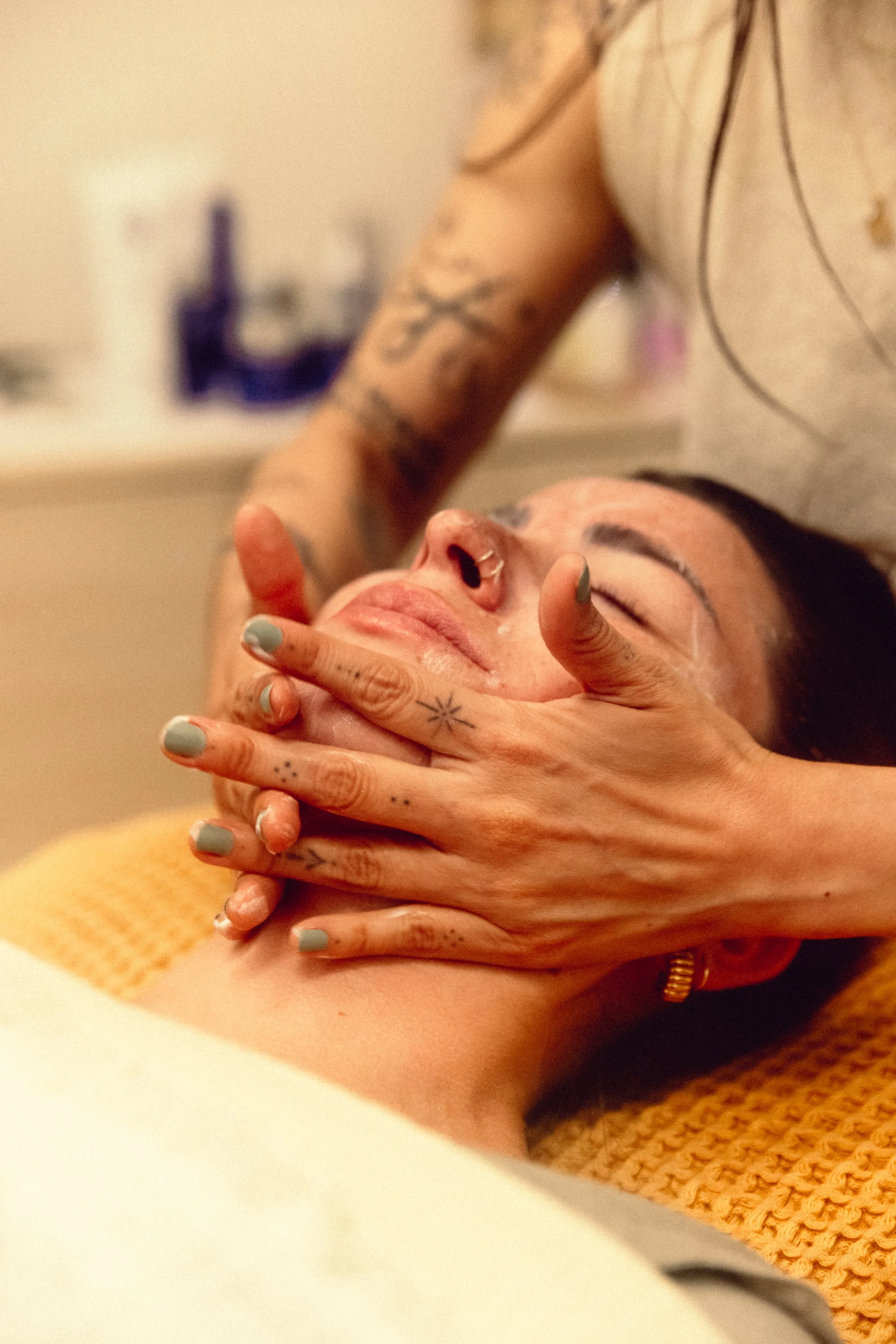
Of all the techniques I incorporate into my facial treatments, buccal massage tends to spark the most curiosity. Understandably so. The idea of having someone massage the inside of your mouth isn't exactly what comes to mind when you imagine a facial.
But once you begin to understand the anatomy of the face, the technique makes a lot more sense.
We spend so much time thinking about our faces in terms of skin. Texture, pores, fine lines, volume, elasticity, the occasional breakout. And while the skin is absolutely important, it's only one part of a much more intricate structure.
Beneath it exists an interconnected arrangement of muscles, connective tissue, fat compartments, ligaments, blood vessels, nerves and bone. These structures work together every time we speak, smile, chew, swallow, or make even the smallest expression.
Our faces are constantly moving, even when we aren't particularly aware of it.
This is where my interest in sculptural facial massage begins. I want to understand what's happening beneath the surface, how those structures influence one another and how thoughtful manual work can encourage greater softness, mobility and balance.
Buccal massage is one of the ways I explore that relationship.
So, what exactly is buccal massage?
Buccal massage, pronounced like buckle, is a specialized intraoral facial massage technique that involves working with the muscles and soft tissues of the cheeks and surrounding jaw from both inside and outside the mouth.
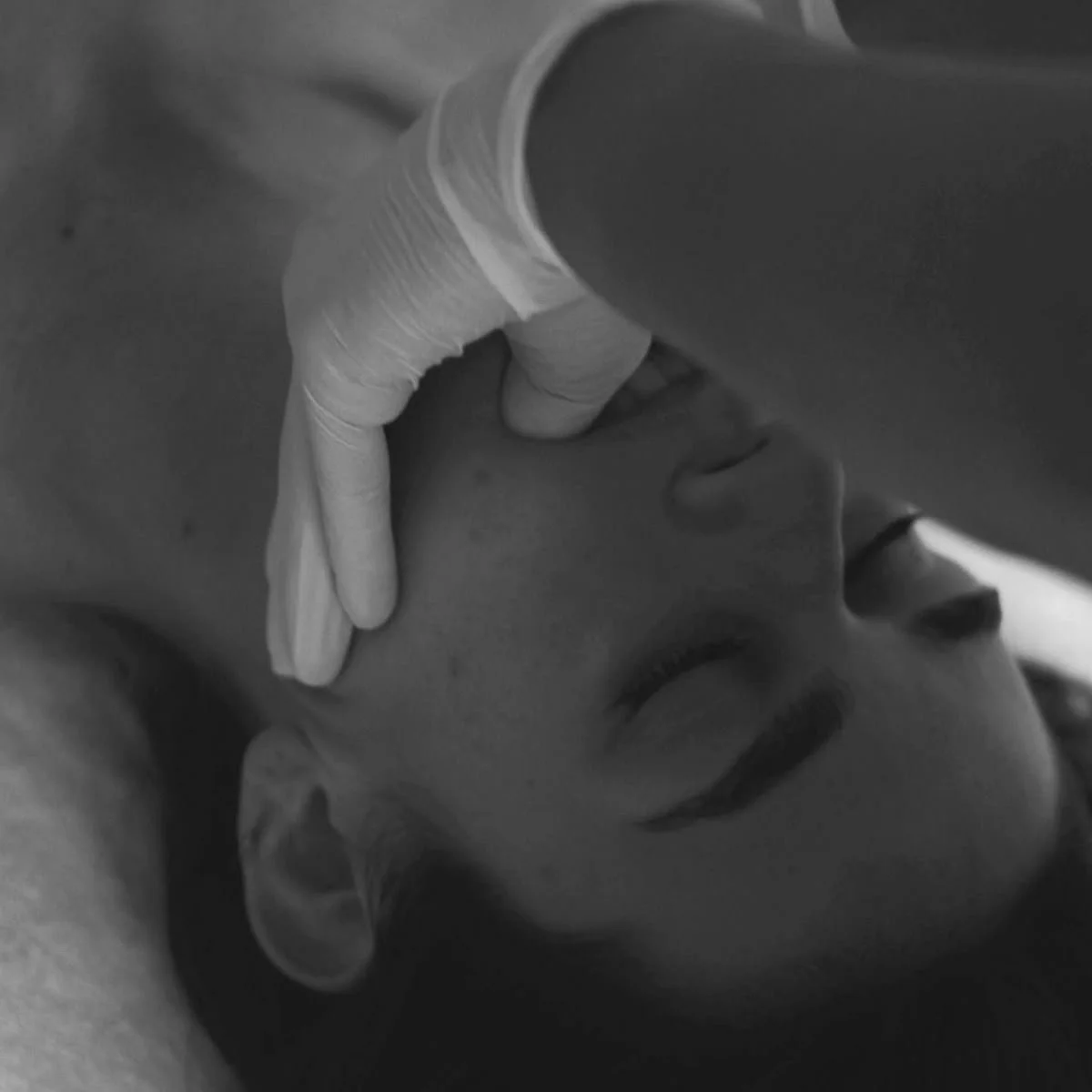
Using gloved hands, the practitioner carefully accesses the inner cheek while supporting and manipulating the tissues externally. This approach creates an opportunity to work with certain areas of facial musculature from an angle that traditional external facial massage cannot reach in quite the same way.
Think about trying to soften a piece of fabric by only working on its surface. You can smooth it, stretch it, and apply pressure, but you may have a different experience when you're able to support the fabric from both sides.
The face is obviously much more complex than a piece of fabric, but the principle helps explain why intraoral work feels so different.
Through controlled compression, stretching and mobilization of the cheek tissues, buccal massage allows for a more detailed exploration of facial tension, particularly around the mouth, cheeks and jaw.
It is often associated with facial sculpting because changes in muscular tension and soft-tissue positioning can influence the way the face appears at rest. Clients may notice a softer expression, more visible cheek or jaw definition, or a feeling of space through areas that previously felt compressed.
The aesthetic effects are part of the appeal.

The anatomy of expression: understanding the muscles of the face
One of the most fascinating things about facial anatomy is that many of our muscles are different from the larger skeletal muscles we typically think of.
A muscle in your arm generally moves a joint by pulling on bone. Many muscles of facial expression, however, have attachments that connect into the skin or surrounding soft tissue.
That's what allows us to communicate so much through expression. A tiny muscular contraction can lift the corner of a mouth, wrinkle the forehead, or change the entire appearance of the eyes. Because these structures are interconnected, what happens in one area can influence the appearance and movement of another.
There are a few muscles I find especially important when explaining buccal and sculptural facial massage.
The buccinator: the muscle within the cheek
The buccinator is a broad, relatively thin muscle that forms much of the muscular wall of the cheek. It plays an important role in keeping food positioned between the teeth while chewing, as well as helping us blow air, suck, swallow, and coordinate movements around the mouth.
Try gently blowing air into your cheeks. That muscular activity you feel through the cheek walls involves the buccinator.
Unlike the masseter, which sits along the outside of the jaw, the buccinator forms part of the inner cheek structure. This is one reason intraoral work offers such an interesting approach: it provides access to the cheek tissues from their internal surface.
With carefully applied pressure and stretching, I can explore how those tissues move, where resistance is present and how the surrounding structures respond.
The masseter: our powerful jaw muscle
The masseter is one of the primary muscles responsible for closing the jaw.
Place your fingers along the back of your cheeks, just above the angle of your jaw and gently bring your teeth together. You'll feel the muscle contract.
Now imagine how frequently that muscle is recruited throughout the day. Through chewing, speaking, clenching, grinding and habitual jaw bracing can all involve the muscles surrounding the jaw. For people who regularly clench their teeth, the area can become particularly tender or overworked. The masseter is primarily approached from the outside of the face and I consider its relationship with the surrounding jaw and cheek tissues when determining how to work.
The temporalis and muscles surrounding the mouth
The temporalis is the broad, fan-shaped muscle along the sides of the head, above the ears. It is another important muscle involved in jaw movement. Around the mouth, the orbicularis oris coordinates movements of the lips, while other facial-expression muscles help shape our smiles and expressions. These structures have different anatomical functions, but they participate in movements that happen together.
This is why I don't approach the lower face as one isolated cheek muscle. When somebody experiences tension around the mouth, jaw, or temples, understanding the relationships between these areas becomes incredibly valuable.

Let's talk about fascia. I like to explain it using an orange.
Fascia is one of those words that gets used constantly in the wellness industry, often without much explanation of what it actually is. I like to make it a little easier to visualize. Imagine peeling an orange. Once you remove the outer skin, you're left with that thin, white, fibrous material clinging to the fruit. It surrounds the segments, separates them and helps hold everything together. That white layer, called the pith, is how I often help clients visualize the connective tissue that exists throughout our bodies.
It isn't anatomically identical to human fascia, of course, but it gives you a pretty good picture of how connective tissue can organize and connect structures rather than simply sit on top of them. Our bodies contain a continuous network of connective tissues that surround, support, separate, and connect muscles and other structures. Within the face, this arrangement becomes especially interesting.
One important layer is the superficial musculoaponeurotic system, commonly referred to as the SMAS. It's a fibromuscular network that connects with the muscles of facial expression and contributes to how movement is transmitted through the facial soft tissues. There are also retaining ligaments, fat compartments and different connective tissue layers that help determine the face's structure and mobility. When I work with facial fascia, I'm interested in how these tissues glide, how readily they move relative to surrounding structures, and whether certain areas seem more resistant to gentle mobilization.
I often describe the work as encouraging the tissue to become more pliable rather than trying to force it into a particular position. A useful distinction here is that facial massage doesn't physically dissolve ligaments or permanently rearrange the architecture of the face. The changes we're exploring through manual work involve tissue mobility, muscular tension, fluid distribution and the way the face is resting at that moment.
And sometimes those changes are surprisingly visible.
Why do we hold so much tension in our faces?
I find this part particularly interesting because most of us don't notice how often we're using our facial muscles until someone brings our attention to them. Think about how you hold your face when you're concentrating. Your jaw may tighten. Your lips might press together. Your brow may furrow. Your tongue might push against the roof of your mouth. Now think about how often these small patterns repeat throughout an ordinary day.
Over time, repeated muscular activity can contribute to tenderness, fatigue and a feeling of tightness in certain areas. Stress can also influence jaw-clenching behaviors and the relationship between stress and muscular activity is something I pay attention to in my practice. This is where the somatic aspect of my work becomes particularly meaningful.
Somatic simply refers to the body and our awareness of physical sensations. In my treatments, it means paying attention to more than how the face looks. I notice breath, muscular resistance, the way someone responds to pressure and whether they seem comfortable enough to allow an area to soften. Sometimes I'll invite a client to notice the space between their upper and lower teeth. Other times, simply bringing their attention to a particular area helps them recognize how much effort they've been using to hold it. There can be a surprisingly emotional quality to receiving intentional touch around the face.
Our expressions are intimately connected to how we communicate and experience the world. For many people, the face is also an area of vulnerability, self-consciousness and constant observation.
I've had beautiful conversations with clients about the relationships they've developed with their faces, the expectations they've carried around beauty and the experience of finally feeling comfortable being cared for. I don't need to interpret someone's emotional history to recognize that those experiences matter. The way a person feels while receiving treatment matters to me just as much as what I'm doing with my hands.
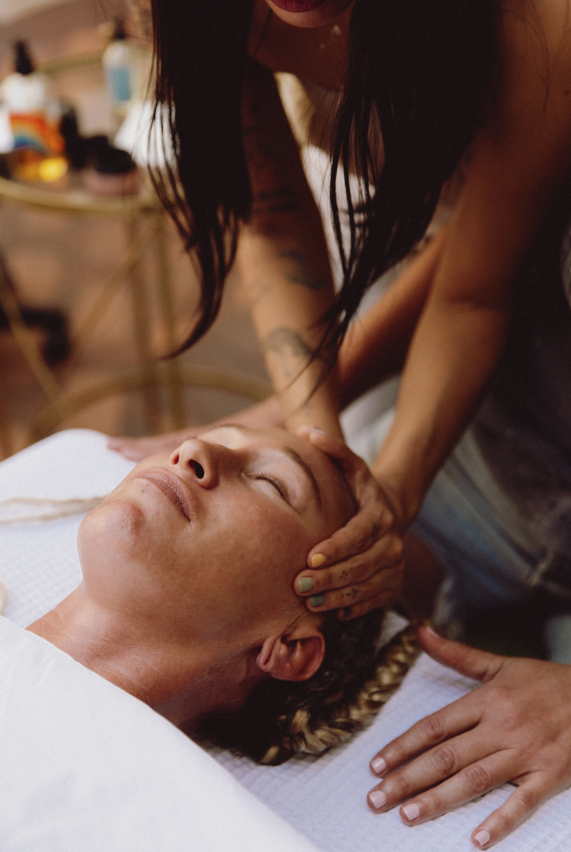
What are the benefits of buccal massage?
Buccal massage is often discussed in connection with natural facial lifting, jaw tension, facial sculpting and muscular release. There are several reasons people are drawn to the technique.
Muscular tension and jaw tightness. Gentle, targeted soft-tissue work may help ease feelings of tightness around the cheeks and jaw. Clients who habitually clench often find this aspect particularly interesting because the sensations can be different from a traditional facial massage.
Facial mobility and softness. Through controlled stretching and mobilization, the tissues around the cheeks and mouth may feel less restricted. Some clients describe being more aware of their jaw or finding it easier to relax their expression afterward.
Temporary facial sculpting and definition. Facial contour is influenced by anatomy, muscular activity, fat distribution and fluid. Following a sculptural treatment, changes in tension and puffiness can sometimes create a more defined appearance through the cheekbones and jawline.
Awareness of habitual holding. One of my favorite outcomes is when a client begins noticing how frequently they clench or brace throughout the day. That awareness can become a useful part of their own self-care.
An opportunity for deep relaxation. Although intraoral massage is more specialized than most facial techniques, it can be incorporated into a slower, restorative treatment experience when performed with clear communication and appropriate pressure.
Research into manual therapy for jaw-related muscular conditions supports the potential for massage and other hands-on approaches to improve discomfort and movement in some people. Research specifically examining the long-term aesthetic effects of cosmetic buccal massage remains more limited.
In my own practice, I pay close attention to the changes clients report and what I can observe before and after treatment, without assuming every face will respond identically. I have seen beautiful results through this work, both aesthetically and in the way clients describe feeling afterward
What does buccal massage actually feel like?
It's a little unusual at first, especially if you've never experienced intraoral massage. There is a sensation of pressure and stretching inside the cheek, often accompanied by external support from the practitioner's other hand. Some areas may feel surprisingly tender, particularly if you're accustomed to holding tension through the jaw. But tender and painful are two different things. Buccal massage should never feel sharply painful, aggressive, or like something you need to endure to receive a result.
Before beginning, I explain the technique, discuss any relevant concerns and ask for specific consent. Fresh gloves and appropriate hygiene are essential and the intraoral portion can be adjusted or omitted entirely. Active mouth sores, oral infections, recent dental procedures, or other concerns affecting the mouth and jaw may mean postponing the technique. Recent facial injections or surgery also deserve special consideration and clearance from the treating professional when appropriate.
Intraoral work isn't necessary for every person or every facial and if someone prefers not to receive it, there are still many meaningful ways to work with the face externally.
Why buccal massage is only one part of my work
My relationship with facial massage has evolved quite a bit over the years. Before creating Sacred Skin Alchemy, I spent years working within medical aesthetics. During my time as an aesthetic consultant, I gained valuable exposure to facial anatomy and the placement considerations involved in injectable aesthetics. Studying the face through that clinical lens deepened my interest in the underlying musculature and structural relationships that influence facial appearance.
As my practice evolved, I became increasingly drawn to manual techniques and what could be accomplished through the hands. My continued education has included the Yakov Gershkovich Sculptural Face Lifting Method, Code of Harmony's Sculpt + Release, intraoral and buccal techniques, lymphatic-focused work, fascia-oriented techniques, and other approaches to facial massage.
Most recently, my studies took me to Japan, where learning from Caoru introduced new depth to my understanding of Japanese facial massage and the intentionality within traditional face and bodywork. Each teacher has influenced the way I approach the face, but I don't believe that any single technique can account for the complexity of an individual person.
At Sacred Skin Alchemy, buccal massage exists within a larger approach I describe as somatic sculptural facial work. Depending on the client and the session, I may integrate external sculptural massage, lymphatic facial techniques, work with the neck and décolleté, facial fascia mobilization, breath and restorative elements alongside intraoral massage.
A face that feels particularly tight through the jaw may call for a different approach than one presenting with visible puffiness, skin sensitivity, or generalized facial fatigue. I don't want every treatment to look identical. The real work, to me, is understanding the anatomy well enough to make thoughtful decisions while remaining attentive to the person experiencing the treatment.
A note for fellow practitioners
As facial massage continues gaining visibility, I've noticed how easy it is for techniques to become recognizable by their movements alone. A hand position. A particular stroke. A dramatic before-and-after photograph. But knowing what a movement looks like and understanding what you're contacting anatomically are two very different things.
When I teach sculptural and somatic facial massage, I'm interested in helping practitioners develop a relationship with facial anatomy that extends beyond memorized sequences.
Where does the buccinator sit in relation to the other structures of the cheek? What is the masseter actually responsible for? How do facial muscles differ from the muscles we're more familiar with elsewhere in the body? Why might the same technique feel entirely different on two people?
What happens when the tissue you're working with doesn't respond the way you expected?
These are the questions I believe deserve attention. The face contains delicate structures, including branches of the facial nerve, vessels and salivary ducts. Anatomical education, hygiene, appropriate training and an understanding of professional scope are essential foundations for anyone interested in more specialized facial work.
I'm continuing to study because there's always another layer to understand and I'm equally passionate about sharing that education with other practitioners who want to approach facial massage with more curiosity, intention and anatomical awareness.
Frequently asked questions about buccal massage
Does buccal massage hurt?
It shouldn't be sharply painful. You may experience firm pressure or tenderness, particularly around areas of habitual tension. Pressure should always be adapted to your comfort, and communication is encouraged throughout the session.
Is buccal massage the same as buccal fat removal?
No. Buccal fat removal is a surgical procedure that removes a portion of the deep fat pad within the cheek. Buccal massage is a nonsurgical manual technique. It does not remove fat or produce the same anatomical changes as surgery.
Can buccal massage help with jaw clenching or TMJ tension?
It may help provide relief from muscular tightness associated with habitual clenching. However, temporomandibular disorders can involve the joint, muscles, teeth and other structures. Persistent pain, locking, clicking accompanied by pain, or difficulty opening the mouth should be evaluated by an appropriate dental or healthcare professional.
Will buccal massage change my face permanently?
Facial massage can create temporary changes in the appearance and feel of the facial tissues, including changes in puffiness, muscular tension and resting expression. Those changes vary between individuals and aren't the same as permanently changing the face's underlying anatomy.
How often should someone receive buccal massage?
There isn't a universal schedule. Frequency depends on the person, their goals, comfort and how they respond to treatment. Within my practice, I consider buccal massage one option within a personalized facial session rather than something every client needs routinely.
Where can I experience buccal massage in Long Beach?
I incorporate optional intraoral and buccal massage into selected sculptural facial treatments at Sacred Skin Alchemy in Long Beach, California and during my Mexico City residencies when appropriate.
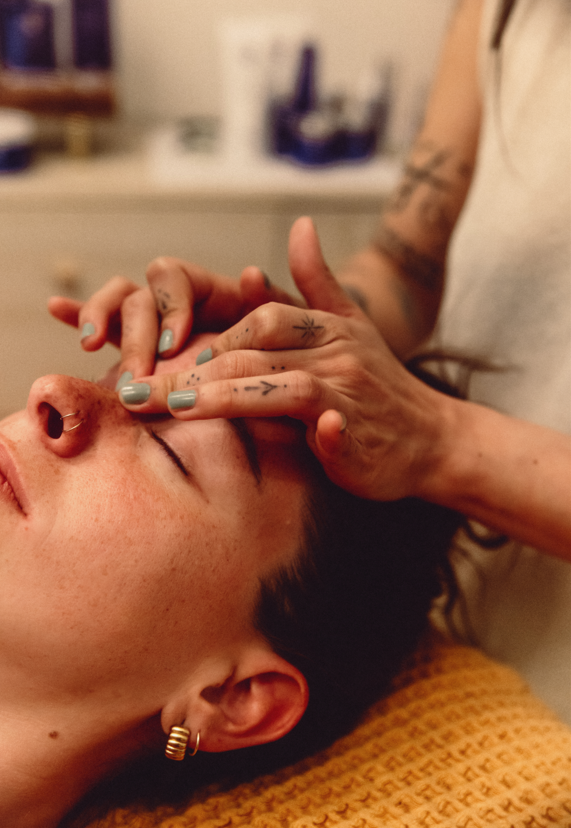
A different relationship with the face
One of the things I love most about this work is how it changes the conversation around facial care. We often learn to look at our faces through a list of things we would like to correct. A line. A fold. A little asymmetry. A jaw that looks different from how it did five years ago. But the face is a living, expressive structure.
It moves with us. It adapts. It reflects years of ordinary movement, habits, relationships and the very human experience of existing in a body. I find that incredibly beautiful.
Buccal massage has given me another way to explore that complexity, but the most important part of my practice will always be the relationship between the person receiving the work and the hands offering it. I want my clients to understand their faces a little better. To recognize the difference between tension and ease. To experience facial care that considers the tissues beneath the skin as thoughtfully as the skin itself. And perhaps to leave with a little more appreciation for everything their faces do for them.
With love,Paige 𓆸Licensed Esthetician · Somatic Facialist · Educator
Founder, Sacred Skin Alchemy
Long Beach, California + Mexico City, Mexico
EXPLORE THE WORK
Discover Somatic Sculptural Facial Massage
Explore Treatments & Book a Session
For professional training, editorial inquiries, and brand collaborations: paige@sacredskinalchemy.com