
I've always found it fascinating how much a face can change within the course of a single treatment. Sometimes it's subtle: the jaw appears less tense, the cheeks look more defined, or the eyes seem a little more open. Other times, the difference is noticeable enough that a client recognizes it before I hand them a mirror. It's one of the reasons I've become so invested in sculptural facial massage, but it's also what keeps me asking questions. What exactly are we seeing? Are we observing changes in muscular tension, the movement of superficial fluid, the way connective tissue responds to touch, or a combination of things?
We're taught to think about our faces primarily in terms of skin: texture, fine lines, elasticity, pores, and the products we apply to them. But beneath the surface is an intricate arrangement of bones, fat compartments, muscles, fascia, ligaments, blood vessels and nerves. These structures influence not only what we look like, but how we speak, chew, smile, concentrate and rest. Facial sculpting becomes much more interesting when we stop thinking of the face as a surface to manipulate and begin looking at the anatomy that gives it form.
The Anatomy of a Sculpted Face
Our facial bones provide the framework, but the shape we recognize in the mirror is created by far more than bone. The zygomatic bones establish the architecture of the cheekbones, while superficial and deep fat compartments contribute volume and softness. Connective-tissue partitions and retaining ligaments help organize and support these tissues. Meanwhile, muscles create expression and movement, and skin follows the contours of the structures beneath it. Two people can have similar cheekbone anatomy and still have very different facial contours because the relationships among these tissues are individual.
I sometimes compare the face to a beautifully constructed garment. There's an underlying structure, lining, seams, and an outer layer, and each affects how the whole piece rests. You might smooth or reposition the fabric temporarily without changing how the garment was originally constructed. Sculptural facial massage works with this kind of distinction: it can influence the sensation and appearance of soft tissues without changing cheekbones, removing fat, or surgically repositioning the deeper structures of the face.
Facial Muscles and the Anatomy of Expression
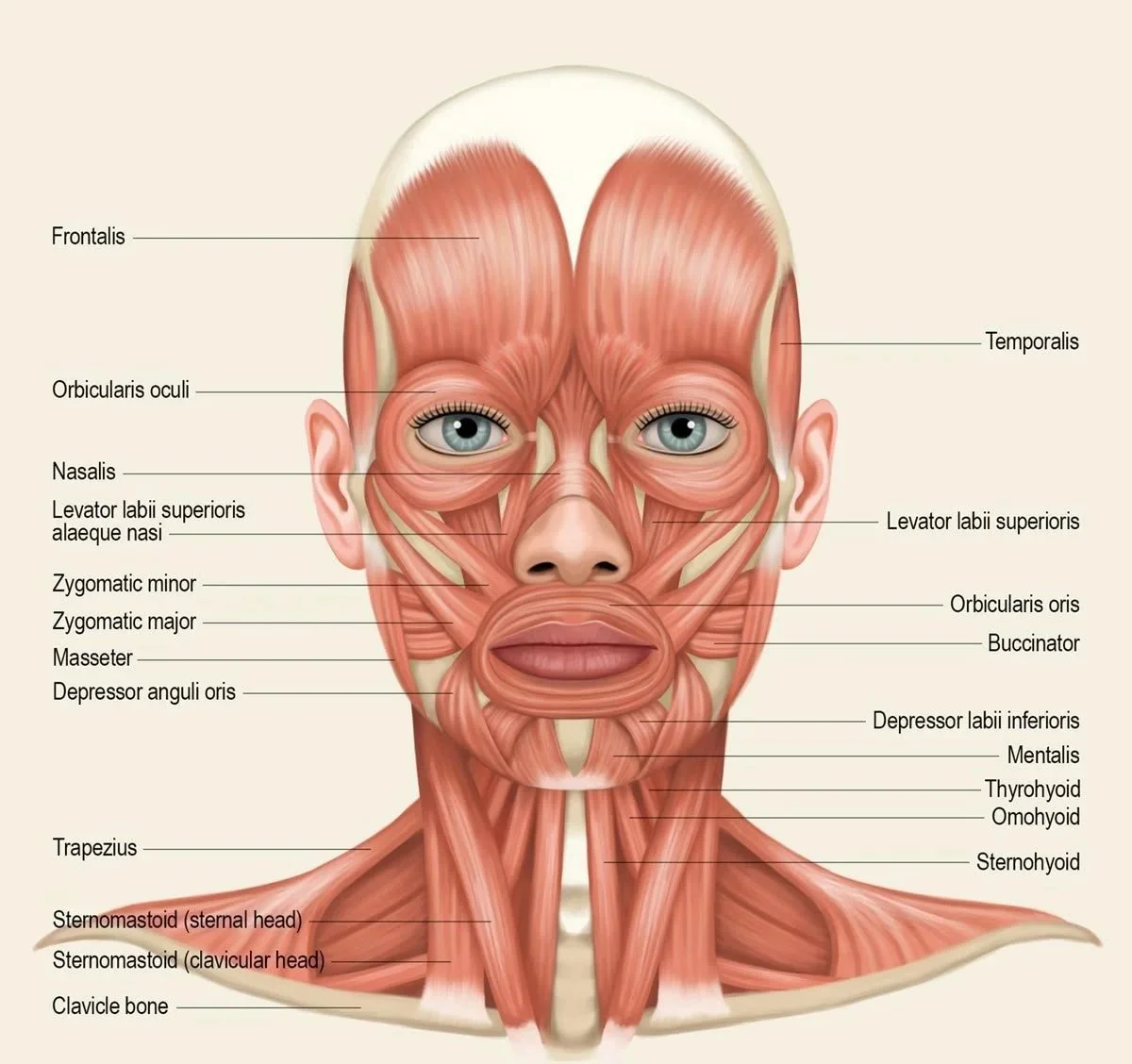
Many of the muscles we think of elsewhere in the body move joints by pulling on bone. Several muscles of facial expression are different: they connect into skin or nearby soft tissues, allowing even a small contraction to change what we see on someone's face. The zygomaticus major helps lift the corners of the mouth when we smile, while the zygomaticus minor contributes to movement of the upper lip. The orbicularis oculi, surrounding the eyes, is involved in closing the eyelids, squinting, and the expressions that form around our eyes when we smile. These are small movements, but they are constantly shaping how our faces appear.
Then there are the muscles involved in chewing. The masseter sits along the side of the jaw, and the broad, fan-shaped temporalis lies at the temples. Both are involved in jaw function. When someone habitually clenches or braces their jaw, they may experience tenderness or a persistent sensation of tightness through the lower face. This is where understanding muscular function becomes particularly valuable. The goal isn't simply to push the cheeks upward; it's to recognize which tissues we're contacting, what those muscles do, and how the face looks and feels when unnecessary tension begins to soften.
Facial Fascia and the SMAS: What Lies Beneath the Skin
Fascia is one of those words that appears constantly in wellness conversations but isn't always explained very clearly. I like to use an orange. Once you peel away its outer skin, you're left with that thin white, fibrous pith surrounding and separating the fruit's segments. It's not anatomically identical to human fascia, but it's a useful way to visualize connective tissue as something that organizes and connects structures rather than simply covering them.
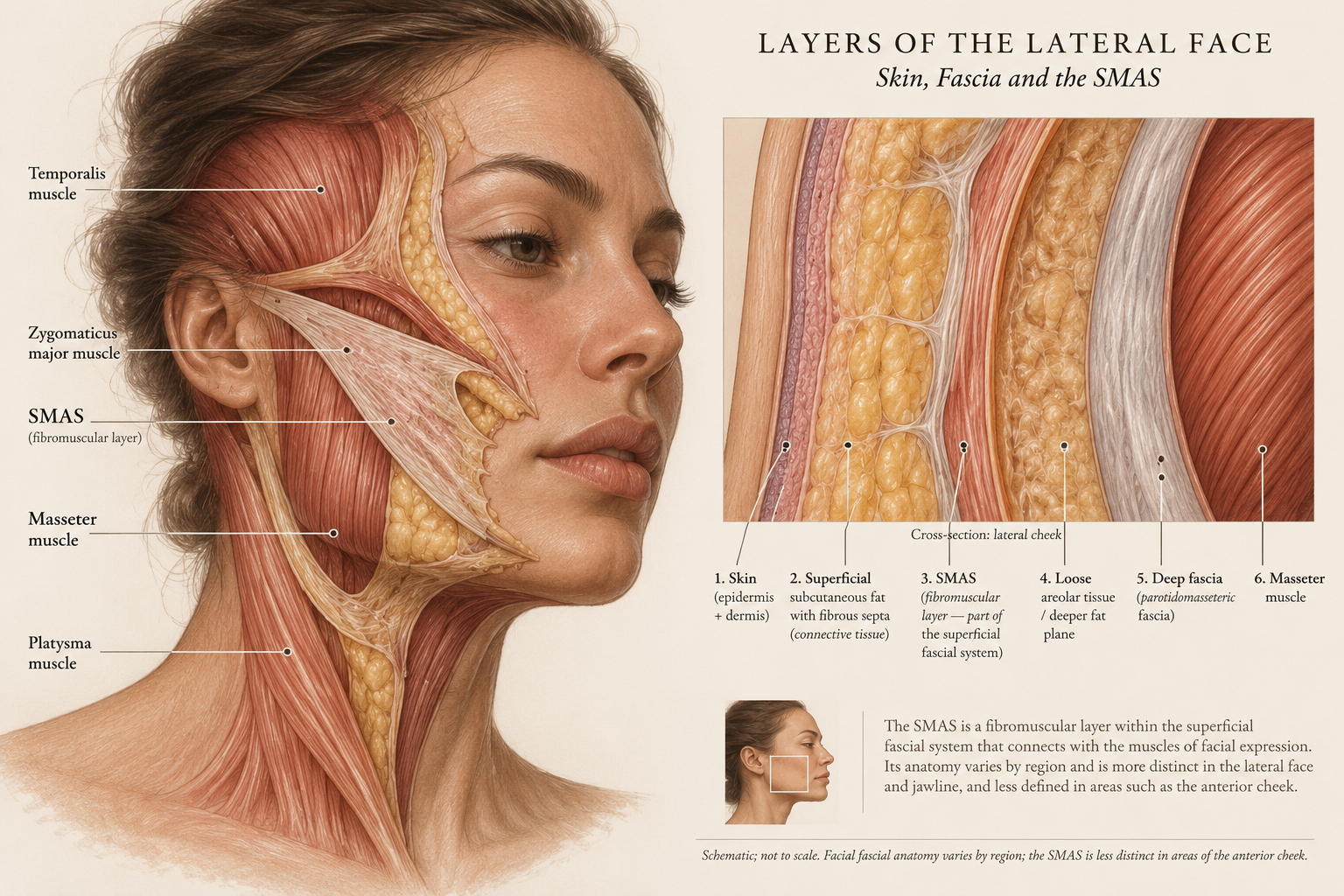
In the face, an important part of this connective-tissue arrangement is the superficial musculoaponeurotic system, or SMAS. This fibromuscular layer is associated with facial-expression muscles and the transmission of movement through the superficial facial tissues. It isn't a perfectly uniform sheet covering every part of the face; its appearance and relationships vary by region. The facial retaining ligaments, fat compartments, and deeper fascial layers also contribute to how the tissues are organized and how much movement is possible between them.
When I work with facial fascia, I'm interested in how the tissues move relative to one another, where the client experiences resistance, and how different directions and qualities of touch affect that experience. I'm not trying to break apart fascia, dissolve ligaments, or permanently relocate the face's structural supports. I'm working with soft-tissue mobility in a way that's responsive to the anatomy and the person in front of me. Understanding these distinctions is what makes manual facial work more precise and meaningful.
Lymphatic Drainage Versus Sculptural Facial Massage
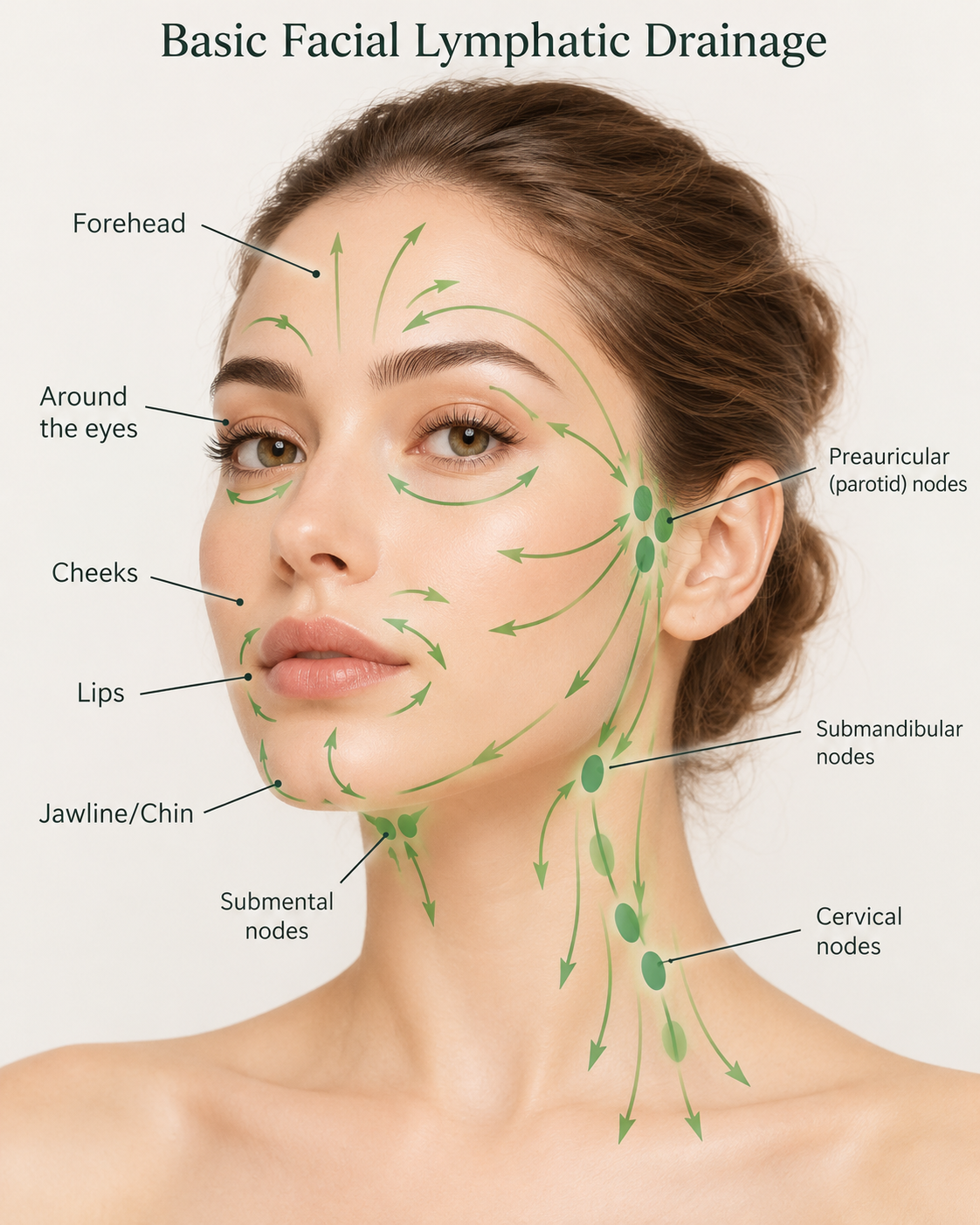
These techniques are often spoken about as though they're interchangeable, but they have different primary intentions. The lymphatic system helps manage fluid balance by collecting excess interstitial fluid - the fluid that occupies spaces between our cells - and returning it to circulation. Manual lymphatic drainage uses specialized, generally light movements intended to encourage lymphatic fluid movement. In cosmetic facial work, people often seek these techniques when temporary puffiness makes the cheeks, under-eyes, or jawline look fuller than usual.
Sculptural facial massage focuses more directly on the muscles and surrounding soft tissues, using controlled compression, stretching, lifting movements, and mobilization. I might spend time around the masseter when someone's jaw feels overworked, explore the mobility of the cheek tissues, or use a different quality of contact around the temples and mouth. Lymphatic-focused techniques and sculptural massage can complement one another, but knowing why you're choosing a movement matters more than simply using every technique in the same sequence.
Facial Posture Correction and the Role of Consistent Treatments
Just as we develop habitual patterns in the way we hold our bodies, we develop them in our faces. Jaw clenching, pursed lips, squinting, and repeated muscular bracing can influence the way our expression looks and feels at rest. The muscles of facial expression and mastication aren't operating independently; their coordination, resting activity, and relationship with the surrounding connective tissues all contribute to that expression. Facial posture, as I use the term in my work, is less about forcing symmetry and more about recognizing the unnecessary effort some people habitually carry in their faces.
With consistent, anatomically informed sculptural massage, the aim is to address excessive muscular tightness, encourage soft-tissue mobility and bring attention to patterns a client may not even realize they're repeating. A person who notices how often they press their teeth together, for example, has an opportunity to practice allowing the jaw to rest between appointments. Repeated treatment paired with that kind of awareness can help someone maintain a more comfortable resting expression over time.
A Client's Facial Sculpting Progression
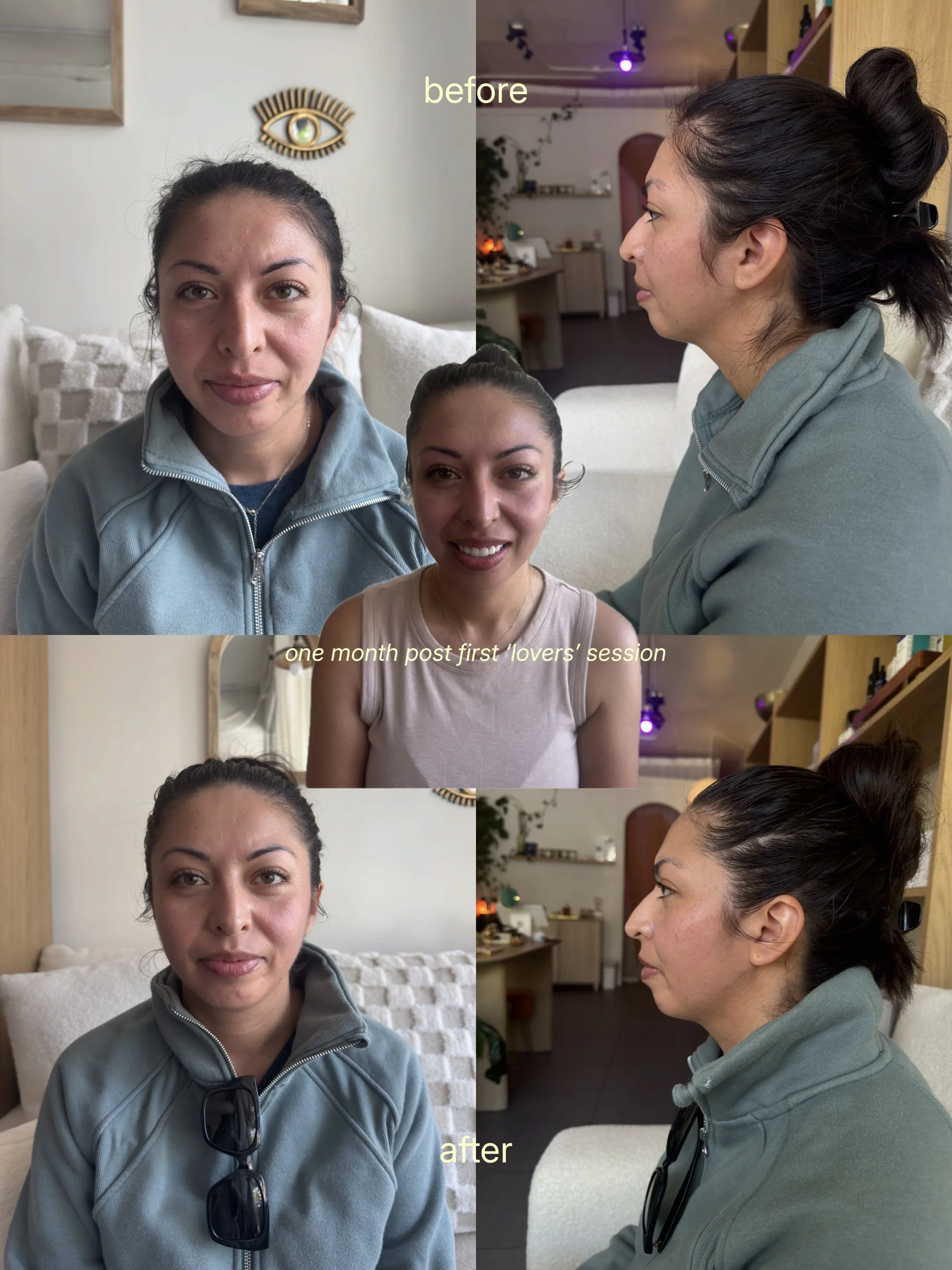
These photographs document the progression of a client's facial sculpting treatments at Sacred Skin Alchemy. The top images were taken before her first The Lovers session, the bottom images following that initial treatment, and the center portrait after her second session, approximately one month later.
Our work focused on the relationship between facial musculature, connective tissue, lymphatic movement and habitual tension. Through personalized sculptural facial massage and lymphatic-focused techniques, the intention was to encourage tissue mobility, reduce muscular tightness and support a more relaxed resting expression.
In the comparison photographs, we can observe subtle differences in the appearance of fullness through the lower cheeks, opened eyes, a more defined jawline in profile, and a softer overall facial expression. The subsequent portrait documents her appearance as we continued the work.
This is what makes consistent, anatomically informed facial massage so interesting to me. Beyond temporary sculpting, repeated sessions offer opportunities to address habitual patterns of muscular tension while encouraging greater awareness of how we hold and use our facial muscles. Individual responses vary.
So, Can Facial Massage Actually Lift the Face?
I think it's important to ask what we mean by lift. In the beauty industry, that word can describe anything from a face looking refreshed after massage to a surgical procedure that repositions deeper tissues. These aren't the same thing. Through sculptural massage, some people notice a more defined cheek or jawline, a decrease in the appearance of puffiness, or a softer expression as muscle tension changes. I've witnessed beautiful results in my own treatment room, both aesthetically and in what clients tell me they're feeling and those observations are part of why I continue to study the work.
What the Research Says and Why the History of Touch Matters
While clinical research on facial sculpting is still developing, intentional touch and manual care have histories that extend far beyond today's beauty industry. Gua sha belongs to Chinese healing traditions; Japan has its own histories of anma and shiatsu; and in Mexico, traditional practitioners known as sobadores use sobada, or therapeutic massage, within distinct cultural approaches to care. These practices aren't interchangeable, and traditional Chinese facial mapping shouldn't be confused with a validated clinical method for diagnosing internal disease. But their histories matter, especially as Western beauty begins celebrating hands-on treatments as the next big thing. Research offers some interesting starting points: a 2018 Japanese study found that five minutes of facial rolling increased blood flow in the treated cheek, while five weeks of regular use changed its vascular response to heat. A 2025 randomized study involving 34 women in South Korea reported measurable changes in facial contour after eight weeks of facial rolling or gua sha, with differences in measured muscle properties and skin elasticity depending on the technique. Qualitative research on Mexican immigrants' use of sobadores has also documented how traditional manual care continues alongside biomedical treatment. Even Vogue's 2026 beauty coverage has described renewed interest in intraoral and sculptural massage as a return to human touch. I find that shift telling. After years of product launches, elaborate routines, and being encouraged to see every natural change in our appearance as a problem requiring another purchase, I believe more women are questioning the relationship between beauty and consumption. My belief is that somatic skincare is at the forefront of beauty's next evolution because we're reconsidering the value of connection, anatomy, tradition and consistent care. I'm not rejecting good skincare or scientific progress, I'm questioning the idea that the future of beauty must always be another product on the shelf.
Why I Don't Believe Every Face Needs the Same Sequence
My background in clinical aesthetics shaped the way I understand the face. I have gained a ton of exposure to the anatomical considerations involved in aesthetic treatments, including the placement of injectables. That experience strengthened my interest in the relationship between facial anatomy and appearance. As my work evolved, I became increasingly drawn to what could be accomplished through the hands and I continued studying sculptural facial massage, intraoral techniques, facial fascia, lymphatic-focused methods, and the relationship between muscular tension and expression.
More recently, studying Japanese facial massage with Caoru in Japan gave me a different perspective on precision and intention. Watching and feeling the subtleties of a technique reminded me that knowing what a movement looks like is not the same as understanding the tissue beneath it. That distinction shapes my treatments and my professional trainings. I don't want every facial to be a choreography performed regardless of who's on the table. Someone arriving with jaw tension may need a different approach from someone primarily concerned with puffiness or general facial fatigue. And sometimes the same person benefits from a completely different session a month later.
When I teach sculptural and somatic facial massage, I encourage other practitioners to ask what they're contacting, what function that structure serves, how the surrounding tissues influence it, and why a particular movement belongs in a particular treatment. The face deserves more than a memorized routine. I believe there is artistry in the work, but that artistry becomes far more meaningful when it's supported by anatomical education, observation, appropriate training, and a willingness to keep learning.
What to Expect From Facial Sculpting at Sacred Skin Alchemy
At Sacred Skin Alchemy in Long Beach, my approach to sculptural facial massage goes beyond a conventional facial focused only on the skin's surface. Depending on the person and the session, I may incorporate external facial sculpting, lymphatic-focused massage, fascia-oriented mobilization, work around the jaw, neck and scalp, botanical skincare, breath work, and moments of stillness. Some of my treatments also include optional buccal or intraoral techniques when appropriate. The intention is to create a session based on what I observe and what the client communicates, rather than assuming one sequence will suit every face.
For anyone curious about working with the jaw and cheek tissues from within, I explore the technique in more detail in my separate Love Letters article, What Is Buccal Massage? The Art of Working From Within. If you're looking for cheek sculpting or somatic sculptural facial massage in Long Beach, you can also explore my treatment offerings and approach on the Sacred Skin Alchemy website. I continue to share this work through practitioner education and select Mexico City residencies, and both experiences influence how my method develops.

Frequently Asked Questions About Facial Sculpting Massage
Does facial sculpting massage really work?
Some people experience temporary changes in facial appearance or muscular comfort after massage, including a more relaxed expression or less visible puffiness. Clinical research has reported measurable changes with specific repeated focused-massage techniques.
Can facial massage make my cheekbones look more defined?
It may make cheek contours appear more visible if puffiness or habitual muscle tension is influencing their appearance. Massage doesn't enlarge the zygomatic bones or remove cheek fat.
Can facial sculpting massage help the jawline?
Some people notice a softer or more defined-looking lower face after a session, especially if they were experiencing muscular tightness or temporary facial fullness. Persistent jaw pain, locking, or other concerning symptoms can ease with consistent buccal massage but should be evaluated by a qualified dental or medical professional.
What's the difference between facial sculpting and buccal massage?
Sculptural facial massage is a broader category of external manual techniques for the face and its soft tissues. Buccal massage refers specifically to intraoral work with the cheek tissues and jaw muscles; it may be one optional component of a sculptural treatment, but the terms aren't synonymous.
Does consistent facial massage permanently correct facial posture?
Consistent massage, combined with awareness of clenching and other habits, can help some people experience less tension and a more relaxed resting expression.
How often should I get a sculptural facial?
There isn't a universal schedule. I prefer to consider each client's goals, comfort, response to previous sessions, and practical routine rather than promising that one particular frequency produces the same result for everyone.
A Different Relationship With the Face
The longer I work with faces, the more I appreciate how individual they are. A face is anatomy and expression, structure and softness, movement and rest. It's the familiar way someone smiles, the tension they may not realize they're holding, and all the small expressions that make them recognizable to the people who love them. I love the visible results of sculptural work, but I also love when someone leaves a session with a little more understanding of their own face and a little less urgency to correct it.
I don't think the future of skincare has to be defined by endless consumption. I think there's room for a more considered relationship with our skin, our tissues, our nervous systems, and the practices we choose to care for ourselves. Less correction, more connection. Less consumption, more intention. For me, that's where anatomy, touch and beauty intersect.
With love,Paige 𓆸Licensed Esthetician · Somatic Sculptural Massage Facialist · Educator
Founder, Sacred Skin Alchemy | Long Beach & Mexico City